
 Blog
BlogWhat Free Cash Flow Reveals About a Business
Published on:
Let’s start with a simple truth:
A company can show great profits… and still be short on cash.
Sounds strange, right?
But it happens more often than you think. That’s exactly why experienced investors, lenders, and finance professionals pay close attention to Free Cash Flow (FCF).
While profit tells you how a company performed on paper, free cash flow tells you how much real money the business actually generated.
So, what exactly is Free Cash Flow?
Free Cash Flow is the cash a company has left after paying its day-to-day expenses and investing in assets like machines, equipment, or buildings.
This leftover cash can be used to:
• pay dividends to shareholders
• repay loans
• save for tough times
• invest in growth
Unlike profit, FCF is about real money in the bank, not accounting adjustments.
A commonly taught idea in corporate finance says that:
“Free cash flow represents the cash a company can distribute to investors without harming its ability to operate.”
- The Intelligent Investor, Book by Benjamin Graham
Why people look at Free Cash Flow instead of profit
Profit (or net income) includes things like:
• Depreciation
• Amortization
• Accounting estimates
These reduce profit but don’t reduce cash.
Free cash flow ignores the noise and focuses on: Actual cash coming in and going out.
That’s why many investors say: “Earnings tell a story. Cash tells the truth.”
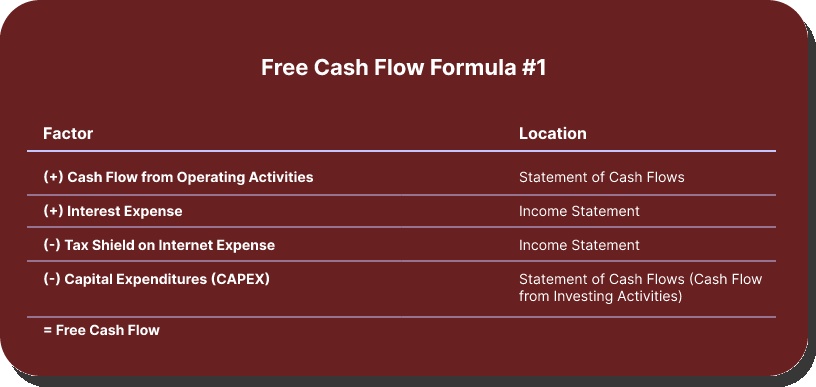
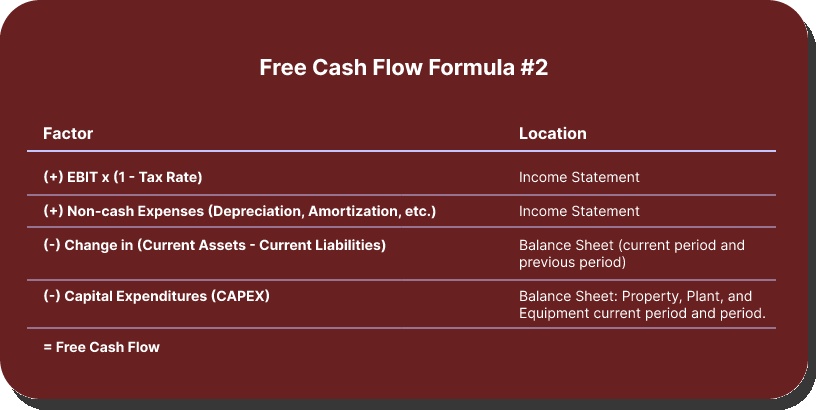
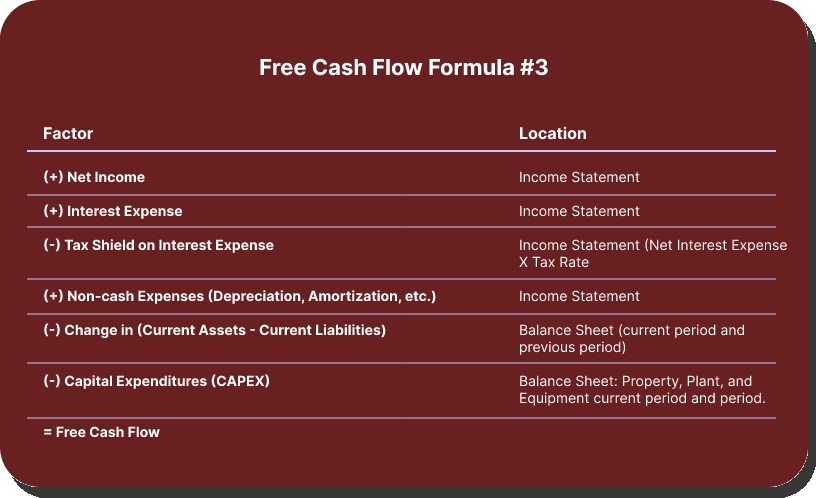
Free Cash Flow formula
Formula 1:
Formula 2:
Formula 3:
What Free Cash Flow Really Reveals (That Profit Often Hides)
Here’s where free cash flow becomes truly powerful.
A company can look perfectly healthy on the income statement for years steady revenue, growing profits, rising EPS and still be quietly struggling underneath. That’s because profit shows performance, but free cash flow shows pressure.
Let’s walk through a simple scenario.
When Profit Looks Stable, but Cash Tells a Different Story
Imagine a company that reports $50 million in net income every year for 10 years.
On the surface, this looks like a dream business:
• Consistent earnings
• Predictable performance
• No obvious red flags
Most investors would assume the company is financially strong.
But now imagine you look at its free cash flow trend, and you notice something worrying:
• FCF has been falling for the last two years
That gap between profit and cash is a signal and signals are what smart investors pay attention to.
What Could Falling Free Cash Flow Be Telling You?
When FCF drops, it usually means cash is getting stuck or squeezed somewhere. Common reasons include:
1. Inventory is piling up
The company is producing or buying more goods than it can sell.
• Cash goes out to buy inventory
• Products sit unsold
• Cash doesn’t come back quickly
Profit may still look fine, but cash is locked on shelves.
2. Customers are paying late
To boost sales, the company may be offering longer credit terms.
• Revenue is recorded
• Profit looks strong
• Cash hasn’t actually arrived
Accounts receivable increase, pulling down FCF.
3. Suppliers want faster payment
If vendors lose confidence, they may shorten credit terms.
• Accounts payable go down
• Cash leaves the business sooner
Another hit to free cash flow.
In all these cases, nothing looks wrong on the income statement, but free cash flow starts waving a red flag.
Why Lenders and Investors Love Free Cash Flow
When a company consistently generates strong free cash flow, it signals one important thing:
the business is producing real cash, not just accounting profit.
This makes it much easier to answer practical questions like:
• Can this company pay its debt comfortably?
• Are future dividends sustainable?
• Is growth being funded by real cash or just accounting profit?
For lenders
When free cash flow is healthy, lenders gain confidence.
By looking at Free Cash Flow to the Firm (FCFF) and subtracting existing debt payments, lenders can see how much cash is truly available to:
• Current service loans
• Safely take on additional debt
This helps lenders judge risk, not just profitability.
For shareholders
Strong free cash flow also reassures shareholders.
If free cash flow remains solid after interest payments, shareholders can reasonably expect:
• More stable dividends
• Less reliance on borrowing to reward investors
In short:
Profit shows ability.
Free cash flow shows reliability.

Shekhar Mehrotra
Founder and Chief Executive Officer
Shekhar Mehrotra, a Chartered Accountant with over 12 years of experience, has been a leader in finance, tax, and accounting. He has advised clients across sectors like infrastructure, IT, and pharmaceuticals, providing expertise in management, direct and indirect taxes, audits, and compliance. As a 360-degree virtual CFO, Shekhar has streamlined accounting processes and managed cash flow to ensure businesses remain tax and regulatory compliant.
You might also like:
- Why is QuickBooks Getting So Expensive? Everything Small Business Owners Need to Know
- Tariff Impacts: Top 10 Accounting and Financial Reporting Issues Every Business Should Watch
- How Outsource Accounting Helps You Make Better Business Decisions
- Which AI Tools Are Delivering Real Results in Accounting
- How CFOs Think About Business Expenses
Listen Exclusive Podcast On